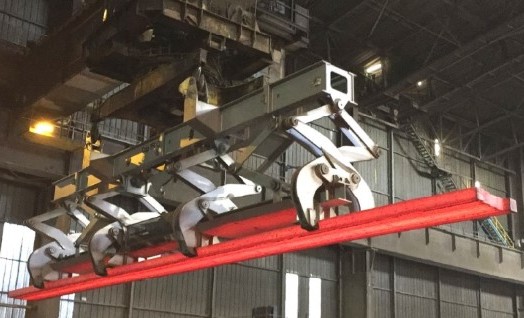
Automatic Billet Tongs are specialized industrial tools designed to safely grip, lift, and manipulate hot metal billets during forging, rolling, and steel manufacturing processes. These tools play a critical role in modern metalworking environments where efficiency, safety, and precision are essential. Unlike manual tongs, Automatic Billet Tongs reduce the need for constant human adjustment, allowing workers to handle heavy, high-temperature materials with improved control and reduced risk.
In industries such as steel production, forging plants, and heavy manufacturing, Automatic Billet Tongs are considered an essential piece of handling equipment. They are engineered to automatically adjust their grip based on the size and shape of the billet, ensuring a secure hold without requiring continuous manual tightening. This makes them especially valuable in environments where speed and safety cannot be compromised.
Understanding Automatic Billet Tongs
To understand the importance of Automatic Billet Tongs, it is essential to first understand what a billet is. A billet is a semi-finished piece of metal, usually steel or aluminum, that is formed into a rectangular or cylindrical shape. These billets are often extremely hot when being processed, sometimes exceeding temperatures of 1000°C in steel manufacturing plants.
Traditional handling tools require workers to manually clamp and adjust the grip on these billets, which can be both time-consuming and dangerous. Automatic Billet Tongs solve this issue by using a self-adjusting mechanism that tightens or loosens based on the billet’s dimensions and weight.
The automatic function ensures that once the tongs are placed on the billet, they securely lock in place without constant operator input. This innovation improves workflow efficiency and reduces the likelihood of workplace accidents caused by slippage or improper handling.
How Automatic Billet Tongs Work
Automatic Billet Tongs operate using a mechanical gripping system that reacts to the load and geometry of the billet. When the tongs are lowered onto the hot metal piece, their jaws automatically adjust to grip it firmly. The design typically includes pivoting arms, tension springs, and locking mechanisms that ensure stability during lifting and transportation.
As the lifting force increases, the gripping force also increases proportionally. This self-tightening mechanism is one of the key features that differentiates Automatic Billet Tongs from manual alternatives. The system is designed so that the heavier the load, the stronger the grip becomes, ensuring maximum safety during operation.
In many industrial setups, these tongs are attached to overhead cranes or hoisting systems. Once engaged, operators can safely transport billets from heating furnaces to rolling mills or forging stations without direct contact with the material.
Key Uses of Automatic Billet Tongs in Industry
Automatic Billet Tongs are widely used across multiple stages of metal production. Their primary function is handling hot, heavy billets, but their applications extend to several critical industrial operations.
One of the most common uses is in steel mills, where freshly cast billets must be moved quickly from continuous casting machines to reheating furnaces or rolling mills. Speed is crucial in this process because delays can affect material quality and production efficiency.
Another important application is in forging workshops. Here, Automatic Billet Tongs are used to transport heated billets from furnaces to forging presses. The ability to handle extreme heat safely allows operators to maintain consistent production cycles without risking injury or equipment damage.
They are also used in billet storage and inspection areas. After casting, billets need to be sorted, stacked, or inspected for quality control purposes. Automatic Billet Tongs make it easier to move these heavy components without requiring multiple workers or additional machinery.
Safety Benefits of Automatic Billet Tongs
One of the biggest advantages of Automatic Billet Tongs is the significant improvement in workplace safety. Handling red-hot metal manually is extremely dangerous, and even minor mistakes can lead to severe burns, injuries, or equipment damage.
The self-adjusting grip system ensures that the billet remains securely held throughout the lifting and transporting process. This reduces the chances of accidental drops, which can be catastrophic in a high-temperature environment.
Additionally, Automatic Billet Tongs reduce the need for workers to be in close proximity to dangerous heat sources. By allowing remote operation through cranes and mechanical systems, they minimize direct human exposure to hazardous conditions.
This improvement in safety not only protects workers but also reduces downtime caused by accidents, ultimately improving overall productivity in industrial operations.
Efficiency and Productivity Improvements
In addition to safety, Automatic Billet Tongs greatly enhance operational efficiency. Traditional billet handling methods often require multiple workers to position, adjust, and secure the load. With automatic systems, a single operator can complete the same task in a fraction of the time.
The automatic gripping mechanism eliminates the need for manual adjustments, allowing for faster cycle times between production stages. This is especially important in high-output environments like steel mills, where even small delays can lead to significant production losses.
Furthermore, the reliability of Automatic Billet Tongs reduces material handling errors. Since the grip adjusts automatically to the billet size, there is less risk of improper lifting or misalignment, which can damage both the material and the equipment.
Design Features That Make Them Effective
Automatic Billet Tongs are engineered with durability and performance in mind. They are typically made from high-strength alloy steel to withstand extreme temperatures and heavy loads. The jaws are often heat-resistant and designed to maintain grip integrity even under continuous thermal exposure.
Another key feature is the balance between flexibility and strength. The tongs must be able to accommodate billets of varying sizes while still maintaining a firm grip. This adaptability makes them suitable for a wide range of industrial applications.
Many modern versions also include wear-resistant coatings and reinforced pivot points to extend their service life. This reduces maintenance costs and ensures long-term reliability in demanding environments.
Why Industries Rely on Automatic Billet Tongs
Industries rely heavily on Automatic Billet Tongs because they offer a combination of safety, efficiency, and durability that is difficult to achieve with manual tools. In environments where time, temperature, and precision are critical, these tongs provide a dependable solution for material handling.
They also integrate well with modern automation systems. As manufacturing becomes increasingly automated, tools like Automatic Billet Tongs help bridge the gap between human operators and mechanical systems, allowing for smoother workflow integration.
Their ability to handle extreme conditions without compromising performance makes them indispensable in heavy industry sectors.
Conclusion
Automatic Billet Tongs are essential tools in the metalworking and steel production industries, designed to safely and efficiently handle hot metal billets. Their automatic gripping mechanism, strong construction, and ability to adapt to different billet sizes make them a superior choice compared to traditional manual tongs.
By improving safety, increasing productivity, and reducing operational risks, Automatic Billet Tongs play a vital role in modern industrial processes. As manufacturing continues to evolve, these tools will remain a key component in ensuring efficient and safe material handling across steel mills, forging plants, and other heavy industries.
