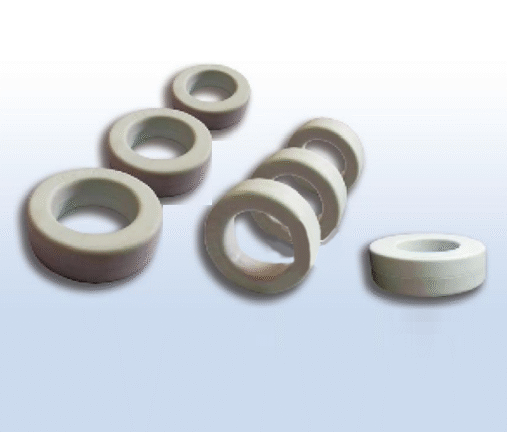
Common mode inductance plays a critical role in modern electronic systems, particularly in mitigating electromagnetic interference (EMI) and ensuring signal integrity. In recent years, advances in magnetic materials have significantly enhanced the performance of common mode inductors, with iron-based nanocrystal rings emerging as a leading solution. Leveraging these materials allows engineers to design highly efficient, compact, and reliable inductors suitable for various applications, from power supplies to industrial electronics. Huoercore, a pioneer in advanced magnetic components, has been at the forefront of developing iron-based nanocrystal solutions that optimize common mode inductance while maintaining lightweight and durable designs.
Understanding Common Mode Inductance
Common mode inductance refers to an inductor’s ability to suppress common mode currents—undesired currents that flow in the same direction through multiple conductors. These currents often lead to EMI, which can disrupt sensitive electronic circuits. Efficient suppression of common mode noise is essential in applications such as power inverters, renewable energy systems, electric vehicles, and communication equipment.
Traditional approaches relied on ferrite cores for common mode inductors. While ferrite cores are effective at high frequencies, they often face limitations in terms of saturation flux density and energy efficiency. This is where iron-based nanocrystal rings provide a significant advantage, combining high magnetic permeability, low core loss, and compact form factors to achieve superior inductance performance.
Advantages of Iron-Based Nanocrystal Rings
Iron-based nanocrystal rings represent a breakthrough in magnetic core technology. They are composed of nanocrystalline iron alloys that exhibit exceptional magnetic properties due to their fine-grained structure. The key advantages of using these materials in common mode inductors include:
High Permeability and Low Core Loss
Nanocrystalline iron rings possess extremely high initial permeability, which allows them to efficiently channel magnetic flux. This property reduces the number of winding turns required to achieve a specific inductance, enabling smaller and lighter inductor designs. Moreover, these materials have lower core losses compared to ferrite cores, particularly in high-frequency applications, which directly contributes to improved energy efficiency and reduced heat generation.
Compact and Lightweight Design
One of the most significant benefits of iron-based nanocrystal rings is their ability to deliver high inductance in a compact size. Huoercore has developed solutions that leverage these properties to create inductors with a smaller footprint without compromising performance. Additionally, when combined with an amorphous core for lightweight inductors, these nanocrystal rings enable the production of even lighter components, making them ideal for aerospace, automotive, and portable electronics applications where weight reduction is critical.
Enhanced Saturation Characteristics
Nanocrystalline materials exhibit superior saturation flux density compared to traditional ferrites. This means that iron-based nanocrystal rings can handle higher current levels without losing their inductive properties, which is essential for maintaining stable performance under varying electrical loads. The enhanced saturation characteristics ensure that common mode inductors remain effective even in high-power or transient conditions.
Broad Frequency Range
Iron-based nanocrystal rings maintain stable magnetic properties across a wide frequency spectrum. This characteristic is particularly important in modern power electronics, where switching frequencies can vary from tens of kilohertz to several megahertz. By providing consistent performance across different frequencies, these rings ensure reliable suppression of EMI in diverse applications.
Applications of Iron-Based Nanocrystal Rings in Common Mode Inductors
The superior properties of iron-based nanocrystal rings make them suitable for a wide range of applications. Huoercore has leveraged these materials in several critical areas, including:
Power Electronics
Inverter systems, DC-DC converters, and power supplies benefit greatly from common mode inductors with nanocrystalline cores. The high permeability and low core loss of iron-based nanocrystal rings improve efficiency, reduce heat generation, and minimize EMI, leading to more reliable power delivery in industrial and consumer electronics.
Automotive and Electric Vehicles
Electric vehicles (EVs) require high-performance inductors for battery management, motor drives, and on-board chargers. Iron-based nanocrystal rings provide the necessary inductance with minimal size and weight, making them ideal for EV applications where efficiency and compact design are paramount. Combining these rings with an amorphous core for lightweight inductors ensures optimal weight reduction without sacrificing performance.
Renewable Energy Systems
Solar inverters, wind turbine converters, and other renewable energy equipment benefit from the high saturation characteristics and low losses of nanocrystalline rings. By effectively suppressing common mode currents, these inductors enhance system reliability and efficiency, contributing to sustainable energy solutions.
Communication Equipment
High-speed communication devices are sensitive to EMI, which can degrade signal quality. Iron-based nanocrystal rings provide consistent inductance over a broad frequency range, ensuring stable performance in routers, data centers, and other communication infrastructure.
Huoercore’s Approach to Optimizing Common Mode Inductors
Huoercore has focused on combining material innovation with precise engineering to develop common mode inductors that leverage the advantages of iron-based nanocrystal rings. The company emphasizes:
- Material Selection: Using high-quality nanocrystalline alloys with controlled grain structures to maximize permeability and minimize core losses.
- Design Optimization: Fine-tuning the ring dimensions, winding configurations, and combination with amorphous cores for lightweight inductors to achieve optimal inductance and thermal performance.
- Quality Assurance: Rigorous testing under varied electrical and thermal conditions to ensure reliability and long-term stability in demanding applications.
This holistic approach ensures that Huoercore’s common mode inductors deliver consistent performance, even in compact and high-power designs, making them a trusted choice for engineers and designers worldwide.
Future Trends in Common Mode Inductor Technology
The development of iron-based nanocrystal rings represents a significant step forward in magnetic core technology, but the evolution of common mode inductors continues. Future trends include:
- Hybrid Core Materials: Combining nanocrystalline rings with amorphous cores for lightweight inductors to further optimize weight, size, and performance.
- Higher Frequency Applications: As switching frequencies increase in power electronics, the demand for cores with low loss at high frequencies will grow.
- Integration with Advanced Packaging: Embedding nanocrystal ring inductors into compact modules for system-on-chip (SoC) and power module applications.
These advancements will continue to push the boundaries of efficiency, reliability, and miniaturization in electronic systems.
Conclusion
Iron-based nanocrystal rings have emerged as a key enabler for optimizing common mode inductance in modern electronics. Their high permeability, low core loss, broad frequency stability, and enhanced saturation characteristics make them superior to traditional ferrite cores. By combining these rings with an amorphous core for lightweight inductors, Huoercore has developed high-performance, compact, and lightweight common mode inductors suitable for applications ranging from power electronics to renewable energy and electric vehicles.
As technology evolves and the demand for efficient, reliable, and lightweight electronic components grows, iron-based nanocrystal rings will continue to play a pivotal role in advancing the design and functionality of common mode inductors. Huoercore’s commitment to innovation ensures that engineers have access to cutting-edge solutions that meet the stringent requirements of modern electronic systems.
