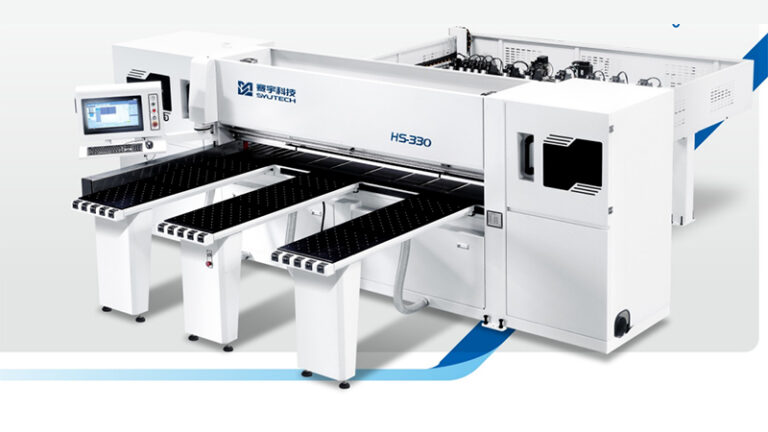
The modern manufacturing industry demands precision, speed, and consistency, especially in sectors such as woodworking, furniture making, cabinetry, and industrial fabrication. As businesses seek to optimize workflows and reduce material waste, advanced machinery has become essential. One of the most valuable tools achieving this balance between accuracy and productivity is the CNC Panel Saw. This advanced cutting machine has revolutionized production environments by offering automation, reliability, and unmatched precision. Understanding its role helps manufacturers appreciate how it transforms operations and supports long-term growth.
Understanding the CNC Panel Saw in Modern Manufacturing
A CNC Panel Saw is an automated cutting machine designed to cut large sheets of material, such as plywood, MDF, particleboard, acrylic, and composite panels. Instead of relying on manual handling or traditional saws, this machine uses computer numerical control (CNC) to guide its cutting path. By programming measurements and cutting patterns into the system, operators ensure every cut is consistent and accurate. This makes the CNC Panel Saw a vital asset for businesses that need to maintain high standards while increasing output.
With digital control at its core, this machine significantly reduces human error and speeds up repetitive cutting tasks. The more complex the project, the more valuable the CNC system becomes, especially when producing precise shapes, multiple identical parts, or customized panel layouts.
Enhanced Efficiency Through Automation
One of the biggest advantages of using a CNC Panel Saw is its contribution to operational efficiency. Traditional saws require manual measurements, alignment, and handling, which can slow down production and increase the risk of mistakes. Automation removes these barriers.
The CNC system can store multiple cutting programs, allowing operators to switch tasks effortlessly. Whether cutting a batch of identical pieces or preparing complex layouts, the machine executes every step with minimal intervention. This reduces downtime, speeds up workflow, and allows staff to focus on other important tasks.
Because of its automated feeding and cutting processes, the CNC Panel Saw can operate continuously for long hours without losing precision. In high-volume environments, this consistent performance can drastically improve productivity and meet strict project deadlines.
Superior Accuracy and Repeatability
Accuracy is at the heart of quality manufacturing. Even minor measurement errors can lead to material waste, mismatched components, or structural weaknesses in final products. The CNC Panel Saw excels in delivering perfect cuts every time, thanks to advanced digital calibration and software-driven precision.
Repeatability is another critical benefit. Once a cutting program is set, the machine can reproduce the exact same cuts indefinitely with no variation. This is invaluable for industries that rely on mass production or batch manufacturing. It ensures that every piece fits perfectly during assembly, raising the overall quality of the product.
The accuracy of a CNC Panel Saw also contributes to better resource management. With fewer mistakes and tighter cutting optimization, manufacturers can reduce raw material waste and lower production costs.
Improved Safety in the Workplace
Manufacturing environments carry inherent risks, especially when working with cutting tools. The CNC Panel Saw enhances operator safety by minimizing direct human contact with the blade.
Most machines come with advanced safety mechanisms such as automatic guards, emergency stop systems, dust extraction setups, and anti-kickback technologies. Because the operator interacts mostly with the control panel rather than the blade, the likelihood of accidents decreases dramatically.
This improved safety not only protects workers but also contributes to better workflow efficiency by reducing injury-related downtime or equipment damage.
Cutting Flexibility for Various Materials and Designs
A wide range of industries rely on diverse materials, each requiring specialized cutting methods. The CNC Panel Saw is designed to handle everything from wood and laminates to plastic and aluminum composite panels. Its flexibility enables manufacturers to expand their product lines and meet evolving market demands without investing in multiple machines.
Additionally, the software allows for complex shapes, angles, and layouts that would be extremely difficult to achieve manually. Whether the project requires intricate cuts or simple straight lines, the machine adapts effortlessly. This versatility enhances creativity and supports advanced design concepts while maintaining speed and accuracy.
Streamlined Production Workflow
The seamless integration of CNC Panel Saw technology into production lines helps create a smooth and efficient workflow. Because the machine supports automated feeding, labeling, stacking, and cutting, it minimizes manual intervention.
This streamlined process improves coordination between different stages of production, such as cutting, drilling, and assembly. It also reduces bottlenecks, helping teams maintain a steady pace and meet tight schedules.
For businesses facing increasing customer demands, this level of workflow optimization is crucial for maintaining competitiveness in fast-paced markets.
Reduced Operational Costs
Investing in a CNC Panel Saw may appear costly initially, but the long-term savings outweigh the upfront expense. By reducing material waste, minimizing human error, increasing throughput, and lowering labor requirements, the machine dramatically cuts production costs.
Since it operates efficiently with minimal supervision, manufacturers can allocate staff to higher-value tasks instead of manual cutting. This contributes to a more skilled workforce and a more profitable business model.
In industries where precision and speed directly impact profitability, reducing operational costs without compromising quality is a major advantage.
How CNC Panel Saws Benefit Small and Large Manufacturing Businesses
Both small workshops and large factories benefit from adopting CNC Panel Saw technology. For small businesses, the machine ensures consistent quality and helps them compete with larger companies. It also makes it easier to manage custom orders with precision and quick turnaround times.
Large-scale manufacturers benefit from enhanced automation, faster cycle times, and the ability to meet massive production demands efficiently. The machine’s scalability ensures it can handle heavy workloads without sacrificing accuracy or speed.
Overall, CNC Panel Saw technology supports growth, efficiency, and innovation for businesses of all sizes.
The Future of Manufacturing with CNC Technology
As technology advances, CNC machinery continues to evolve. Future CNC Panel Saw models will likely have even smarter software, better automation features, and integration with AI for predictive maintenance and cutting optimization.
This ongoing innovation will help manufacturers achieve higher levels of productivity and precision. The continued adoption of CNC technology reflects the industry’s focus on efficiency, resource conservation, and high-quality production.
Conclusion
The CNC Panel Saw has become an essential tool in modern production environments due to its ability to enhance efficiency, improve accuracy, and reduce operational costs. By automating complex cutting tasks and ensuring consistent results, it allows manufacturers to work smarter and faster. Whether for small workshops or large factories, the CNC Panel Saw represents a powerful solution that supports quality, safety, and productivity. Its versatility and innovative features make it a cornerstone of today’s advanced manufacturing systems.
