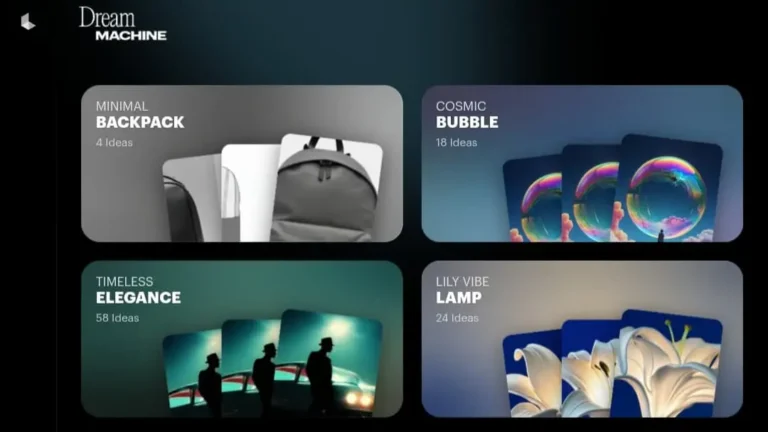
Artificial intelligence is changing the way creators imagine, develop, and produce visual content. From short films and promotional videos to experimental scenes and social media projects, AI-powered tools are making video creation more accessible. Among these emerging technologies, Luma dream machine offers an exciting approach to transforming written ideas and visual concepts into dynamic video sequences. By combining creative direction with artificial intelligence, creators can explore storytelling possibilities that once required extensive production resources.
Understanding AI-Powered Visual Storytelling
Visual storytelling has traditionally depended on cameras, actors, locations, lighting equipment, editing software, and production teams. While these elements remain important, artificial intelligence introduces another creative layer. Instead of beginning every project with physical production, creators can start with an idea, description, image, or visual reference.
Luma dream machine helps bridge the gap between imagination and moving images. A creator can describe a scene and explore how artificial intelligence interprets that concept. The resulting video can then become a starting point for refinement, experimentation, or further storytelling.
This approach is particularly useful when creators want to test ideas before investing significant time and money into conventional production. A filmmaker might visualize a futuristic city, while a marketer could explore a product concept through an atmospheric sequence. The technology allows these ideas to move from written descriptions toward visual experiences.
Turning Ideas Into Video Concepts
Every visual story begins with an idea. However, an idea written on paper can be difficult to evaluate until it becomes something visible. AI video generation provides a way to experiment with concepts quickly.
Creators can think about their intended subject, environment, movement, mood, camera perspective, and overall style. These elements can be combined into a descriptive prompt that communicates the desired scene. The more clearly the creator understands the visual objective, the easier it becomes to guide the generation process.
For example, imagine a story about a traveler exploring an abandoned futuristic city. Rather than immediately organizing a physical shoot, a creator can explore different interpretations of the environment through AI-generated video. One version might emphasize mysterious architecture, while another could focus on the character’s emotional journey.
This process encourages experimentation. Ideas that might have remained sketches can become visual prototypes that help creators decide which direction is most compelling.
Creating Atmosphere and Emotion
Strong visual stories are not only about what appears on screen. They also depend on atmosphere and emotion. Lighting, movement, composition, environment, and pacing can influence how an audience responds to a scene.
Luma dream machine can be incorporated into creative workflows where atmosphere is especially important. A creator might explore a quiet cinematic landscape, a dramatic action sequence, a dreamlike environment, or a visually unusual world. Each experiment can help establish the emotional identity of a project.
For storytellers, this can be valuable during the early development stage. Instead of explaining an imagined sequence entirely through words, creators can produce visual references that communicate mood more directly.
The ability to explore different visual directions also encourages creators to think beyond conventional filmmaking. Artificial intelligence can make unusual combinations easier to test, allowing artists to experiment with settings, movements, and concepts that may be challenging to capture traditionally.
Developing Characters and Scenes
Characters are central to many visual stories. Their surroundings, movements, and interactions help audiences understand the narrative. AI video technology can assist creators in developing scenes around characters and environments.
A creator may begin with a simple character concept and imagine how that character fits into different settings. A mysterious figure could appear in a futuristic laboratory, a historical street, or an imaginary world. Exploring these variations can help establish the visual language of the story.
Scene development can also benefit from iteration. The first generated sequence may not perfectly represent the original idea, but it can reveal new possibilities. Perhaps the environment suggests a different story direction, or a particular camera movement creates a stronger emotional effect. Instead of treating unexpected results as failures, creators can use them as creative prompts.
Supporting Independent Creators
One of the most interesting aspects of AI video generation is its potential to support independent filmmakers, artists, designers, and content creators. Traditional video production can require significant budgets and resources. AI tools can reduce some of the barriers associated with visual experimentation.
This does not mean artificial intelligence replaces every part of filmmaking. Story development, editing, sound design, creative judgment, and artistic direction remain essential. Instead, AI can function as an additional creative instrument.
For independent creators, this can mean greater freedom to visualize ambitious concepts. A small creative team can experiment with scenes that might otherwise require expensive locations, specialized equipment, or large production crews. The result is a workflow in which imagination can play a larger role in determining what gets explored.
Improving the Creative Workflow
A productive AI video workflow usually involves multiple stages rather than relying on a single generation. Creators can begin with a concept, identify the most important visual elements, generate initial sequences, evaluate the results, and refine their direction.
This iterative process resembles other creative disciplines. Writers revise drafts, photographers take multiple shots, and filmmakers edit scenes repeatedly. AI-generated video can follow a similar pattern.
Creators should pay attention to consistency, composition, movement, and narrative purpose. A visually impressive clip is not automatically useful to a story. Every scene should contribute to the larger creative objective.
Organizing generated clips can also make the workflow more efficient. Keeping track of successful prompts, visual references, scene concepts, and revisions can help creators develop a recognizable style across a project.
Exploring New Forms of Creativity
Artificial intelligence does more than accelerate existing production methods. It can also encourage entirely new approaches to storytelling. Creators can combine realistic environments with surreal concepts, experiment with unconventional camera perspectives, or develop visual worlds that would be difficult to construct physically.
Luma dream machine can therefore be viewed as both a production technology and an experimentation platform. Its value lies not only in generating individual clips but also in encouraging creators to ask what kinds of stories become possible when visual production is guided by natural-language ideas.
This can be especially exciting for artists who enjoy experimentation. A single concept can lead to numerous visual interpretations, each offering a different perspective on the original idea.
The Importance of Human Creativity
Despite the capabilities of artificial intelligence, human creativity remains at the center of meaningful storytelling. AI can interpret instructions and generate visual material, but the creator determines why a scene matters.
Story structure, character motivation, emotional pacing, symbolism, and artistic intention require creative judgment. The strongest results are likely to come from workflows where people use AI as a collaborator rather than treating it as an automatic replacement for creative thinking.
Creators who understand their own visual goals can make better decisions about which generated results are useful and which should be discarded. Human direction gives generated imagery context and purpose.
The Future of AI Visual Storytelling
AI video technology is still developing, and its role in creative industries will continue to evolve. As tools become more capable, creators may gain greater control over characters, environments, camera movement, continuity, and storytelling details.
This evolution could influence advertising, entertainment, education, social media, filmmaking, and digital art. More people may be able to visualize ideas without requiring traditional production infrastructure.
Luma dream machine represents part of this broader movement toward accessible visual creation. Its significance is not simply that artificial intelligence can produce video, but that creators can use these capabilities to explore ideas in new ways.
Conclusion
Building visual stories with artificial intelligence combines technology with imagination. Luma dream machine gives creators an opportunity to turn concepts into moving visual experiments, explore different atmospheres, develop scenes, and test storytelling directions.
The most effective approach is not to rely entirely on automation. Instead, creators can combine AI generation with strong storytelling principles, thoughtful direction, careful selection, and continuous refinement. As artificial intelligence becomes increasingly integrated into creative workflows, the ability to move quickly from imagination to visual expression may become one of the most valuable advantages available to modern storytellers.
